HMIAutonomous systems

ORBIT

Fleet Supervision & Intervention

ORBIT is an autonomous fleet supervision system that helps operators understand incidents, intervene when needed, and safely return robots to autonomous operation.

Role Product / HMI Designer
Team Solo
Timeline 6 weeks · Jul–Aug 2026
Project Self-Directed Concept
Interactive prototype Trigger an incident to see how ORBIT responds Open full screen ↗
Interactive prototype Coming online shortly
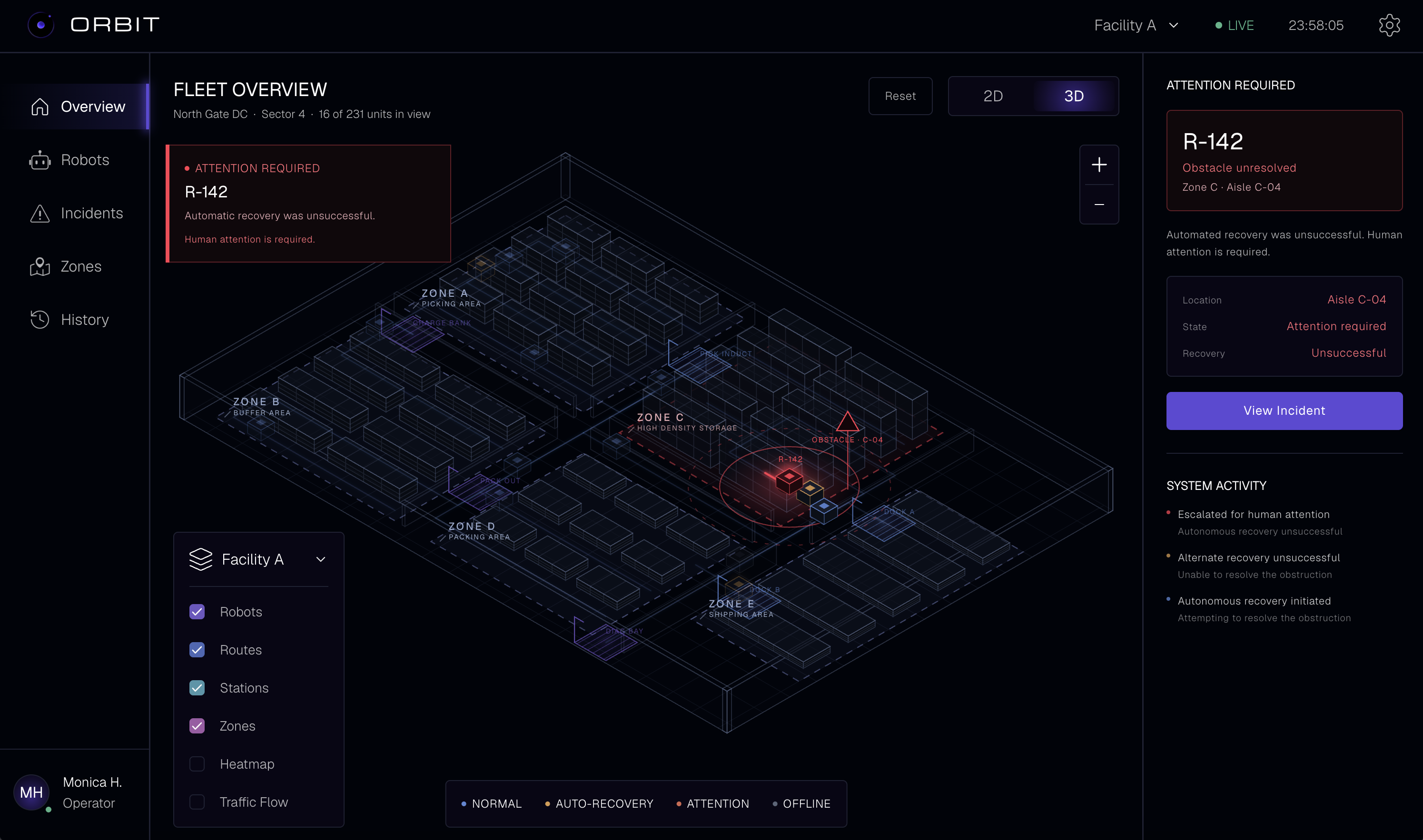
Fleet Overview — one operator supervising an autonomous fleet. Most of the time, this screen asks for nothing.
02

When autonomy needs help

Most of the time, the fleet
runs on its own.
The design problem begins when it can't.

I grounded the project in a single failure scenario: R-142 encounters an obstruction, attempts to recover autonomously, and asks for human attention only when it can no longer resolve the issue.

R-142 obstruction — zone clip drop a video or image here, or click to browse
Normal operation
Obstacle detected
Auto-recovery unsuccessful
Attention required
03

What I learned

Three findings, one reframe

Synthesized from desk research: human-factors literature on supervisory control and teardowns of five AMR fleet-management tools.

Automation handles
the routine.

Robots attempt recovery before escalating. ORBIT stays quiet until human attention is truly needed.

An alert is not
understanding.

Operators need context, not a red dot: what happened, what automation already tried, and what is affected.

Recovery is a
handoff problem.

Clearing the obstacle doesn't mean autonomy is ready to resume. That gap is where trust is won or lost.

The reframe

This was never a monitoring problem.
It's a handoff problem.
Responsibility shifts

from
automation to a human, and back.

The handoff has two directions:
escalation, then hand-back.
04

Designing the handoff

Before any screens

Before designing screens, I defined when
automation operates independently,
when human judgment is needed, and when
responsibility returns to automation.

Human × Automation state modelFig. 01
01 AUTOMATION 02 HUMAN ATTENTION 03 HAND-BACK Attention required Autonomy restored fails succeeds · returns to normal verification fails Normal operation Auto-recovery Incident review Human intervention Recovery verification Confirm & resume

An issue occurs human attention required.

Once human attention is required,
the experience follows three steps.

Human intervention frameworkFig. 02
01 Understand
What happened?
What did the system already do?
What is affected?
02 Intervene
What can I do?
03 Verify & hand back
Is it ready to resume?
System boundary
Robot / Fleet system
Provides system state
ORBIT
Structures system state for human judgment
Operator
Decides · intervenes · confirms
Navigation, path planning, and safety logic remain in the fleet system.
05

ORBIT in action

The R-142 incident from Chapter 02, now shown end to end through the interface.

UnderstandInterveneVerifyConfirm & resumeAutonomy restored
Understand

Before deciding what to do, the operator needs to understand the incident first.
UNDERSTAND — incident review screen with R-142's obstruction detail and recovery timeline
01 What happened Robot, location, failure type
02 What automation tried Recovery attempted and its result
03 Operational impact Affected route and surrounding operations
Intervene

Intervention is choosing a recovery path, not driving the robot.

Operator ORBIT
System-supported response Recovery is handled through the fleet system.
The exact action is implementation-dependent.
On-site intervention The operator coordinates on-site personnel to change the physical environment.

But the worker walking
toward R-142
isn't looking at this screen.

Physical resolution system recovery.

Removing the obstacle doesn't mean the robot is ready to move.
Before it resumes, the system checks that it's ready while the
robot signals its status to nearby workers.

Verify
01
On-site
intervention

A nearby worker removes the obstruction.
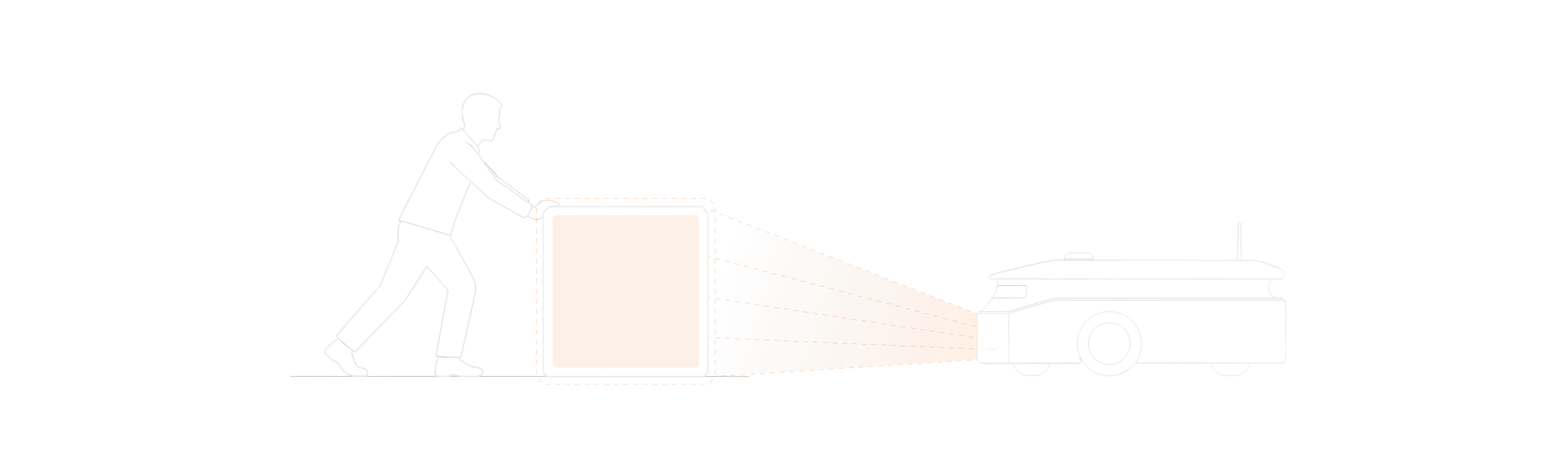
Side view of a worker removing the fallen box from R-142's path while the robot stays paused
02
System
verification

The system re-checks key conditions before the robot can resume.
System checks
Route clear check icon
Route clear Is the path ahead clear?
Position verified check icon
Position verified Does the robot know its position?
Obstruction clear check icon
Obstruction clear Is the obstruction fully removed?
On the floor

While verification is in progress, the robot signals its status to nearby workers.
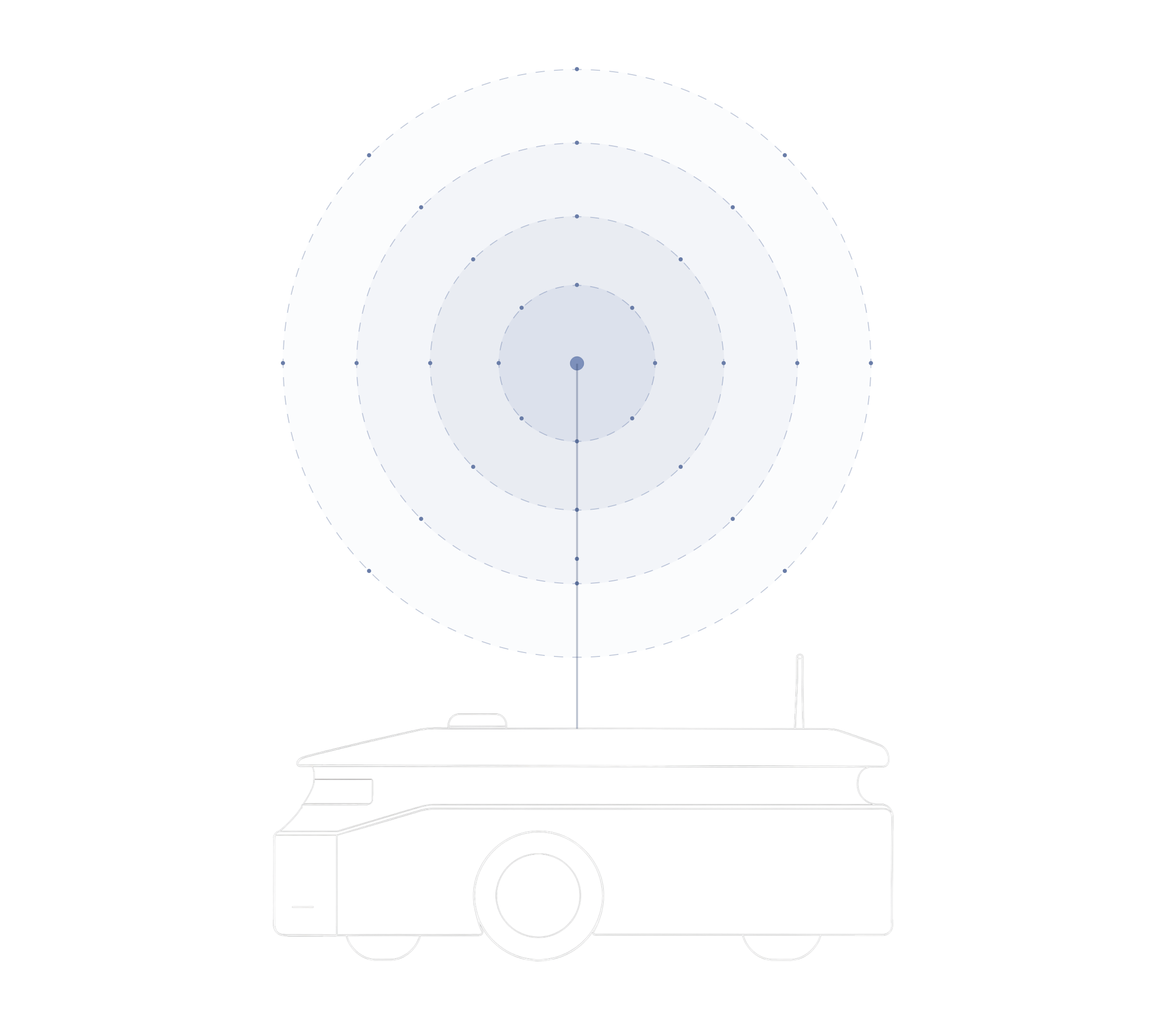
R-142 paused with its status signal raised while a worker approaches
Preparing to resume Not moving yet.
READYFORHAND-BACK?
NO YES
Return to intervention The issue isn't fully resolved.
Await operator confirmation All system conditions are met.
03
Confirm &
resume

The operator explicitly confirms when responsibility can return to automation.
R-142 paused under a blue standby signal — ready and awaiting the operator's confirmation
Ready · PausedAwaiting operator
R-142 is ready to resume.
Return responsibility to autonomy?
Cancel Confirm & Resume
R-142 under a green all-clear signal — autonomy restored
Autonomy restoredR-142 resumes its route
The robot speaks a smaller languagePhysical HMI

Operators need detail to decide. Workers on the floor need enough to act.
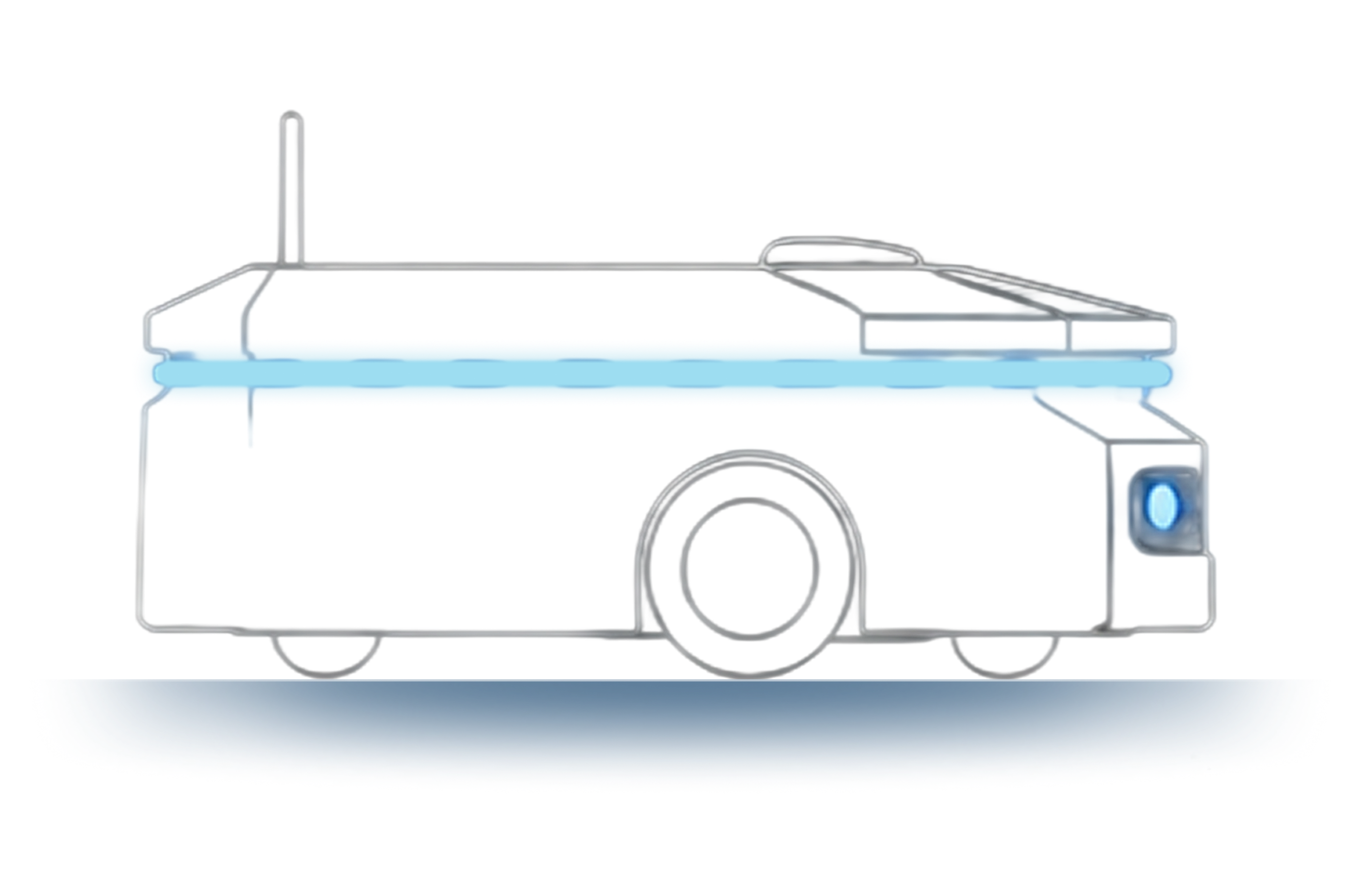
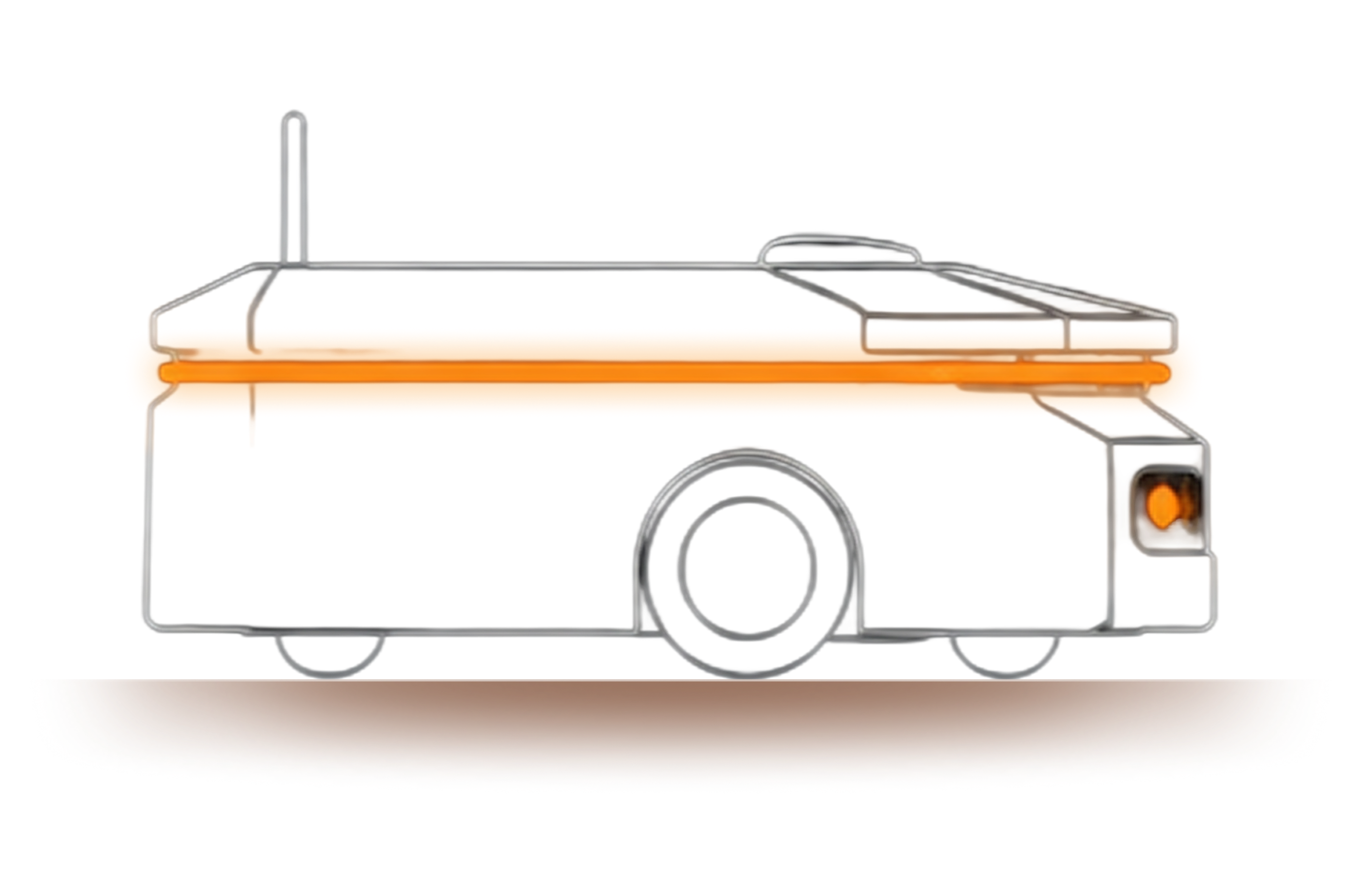
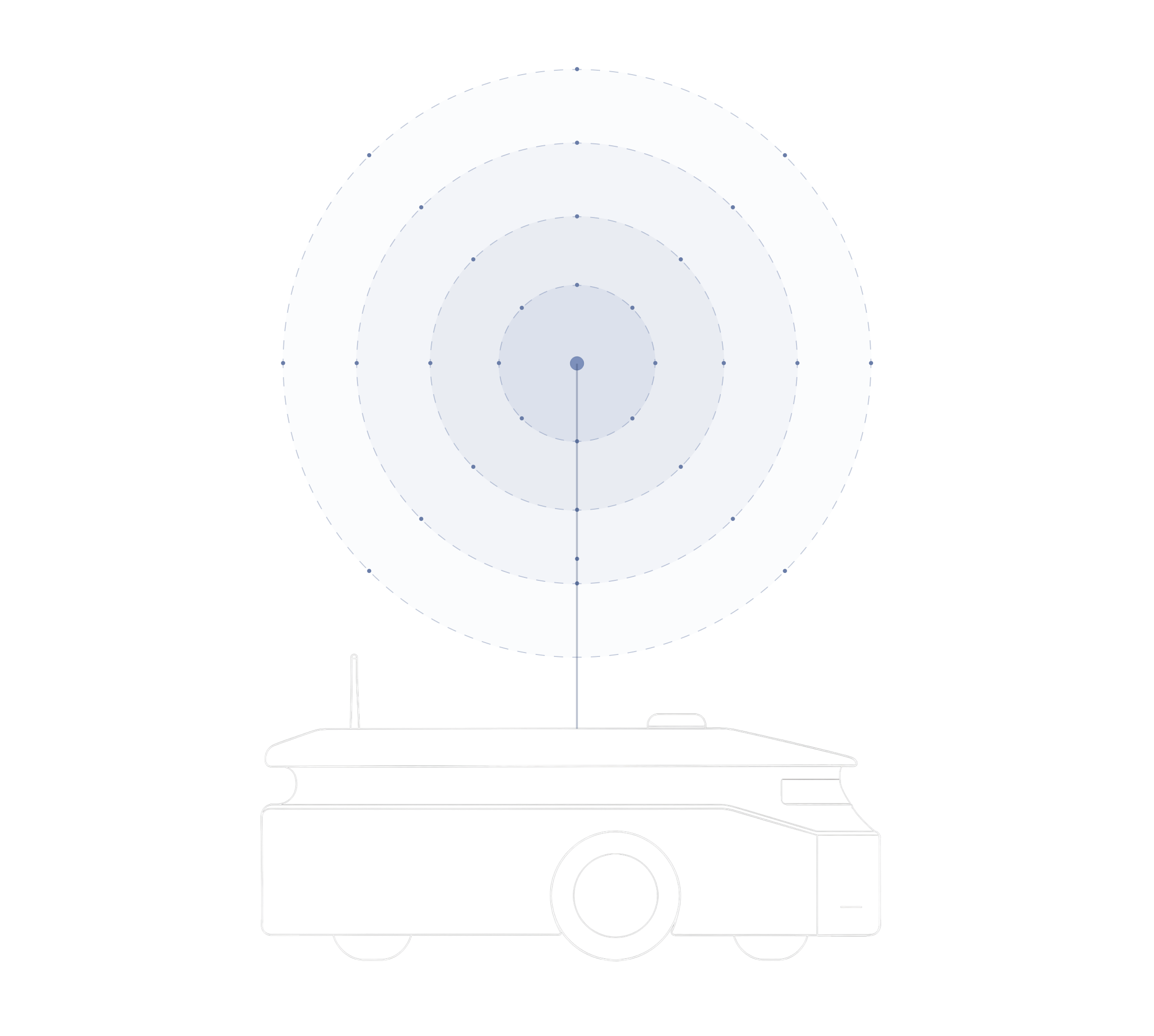
Four physical signals answer the two questions that matter there: does this robot need human assistance, and might it move?
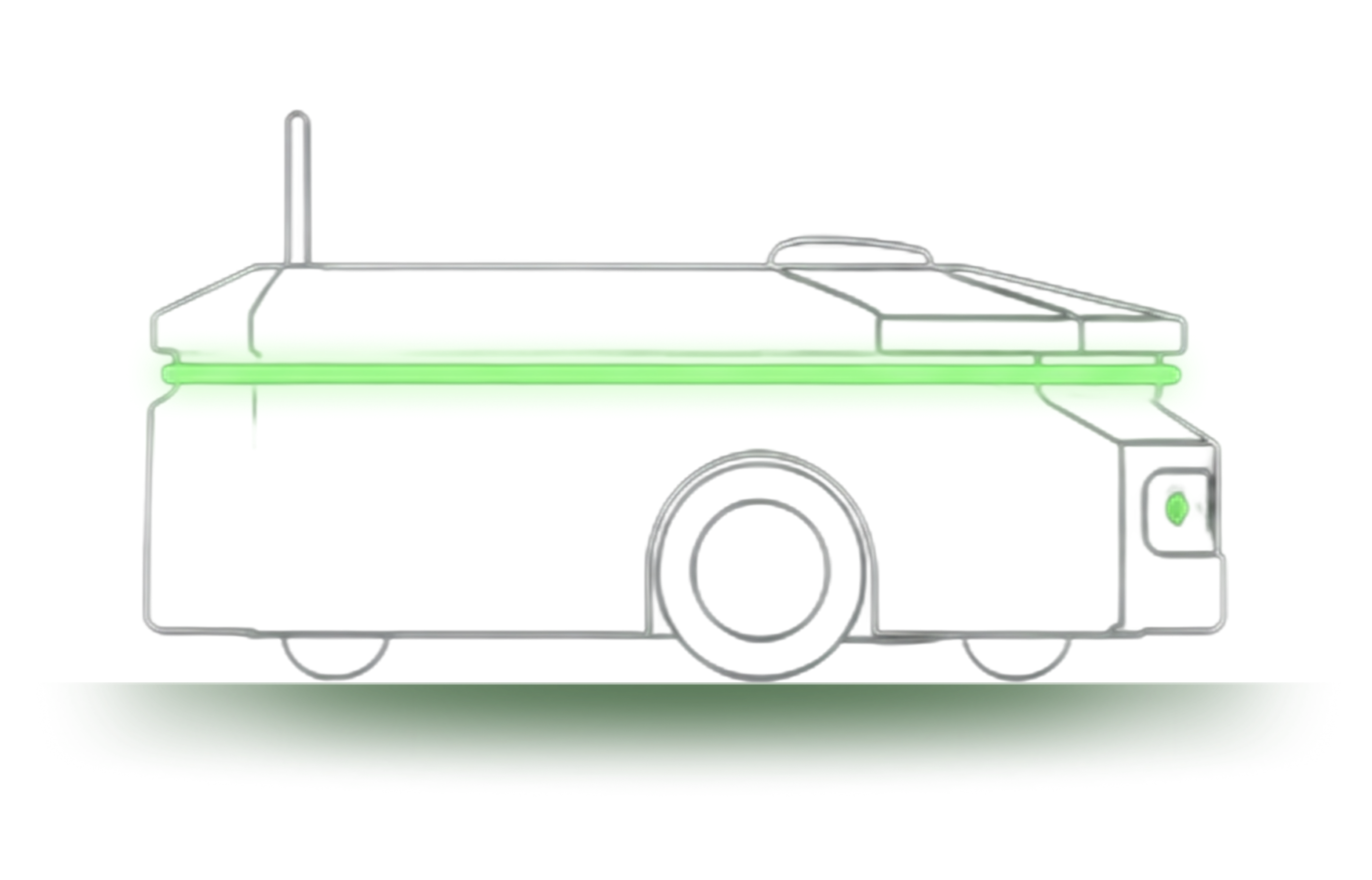
Robot state 01 — steady green light band: autonomous operation
Autonomous operation Operating normally.
May keep moving.
Robot state 02 — pulsing blue light band: autonomous recovery
Autonomous recovery Recovering autonomously.
No human assistance needed.
Robot state 03 — orange light band: human assistance required
Human assistance required On-site action needed.
Do not assume it will resume.
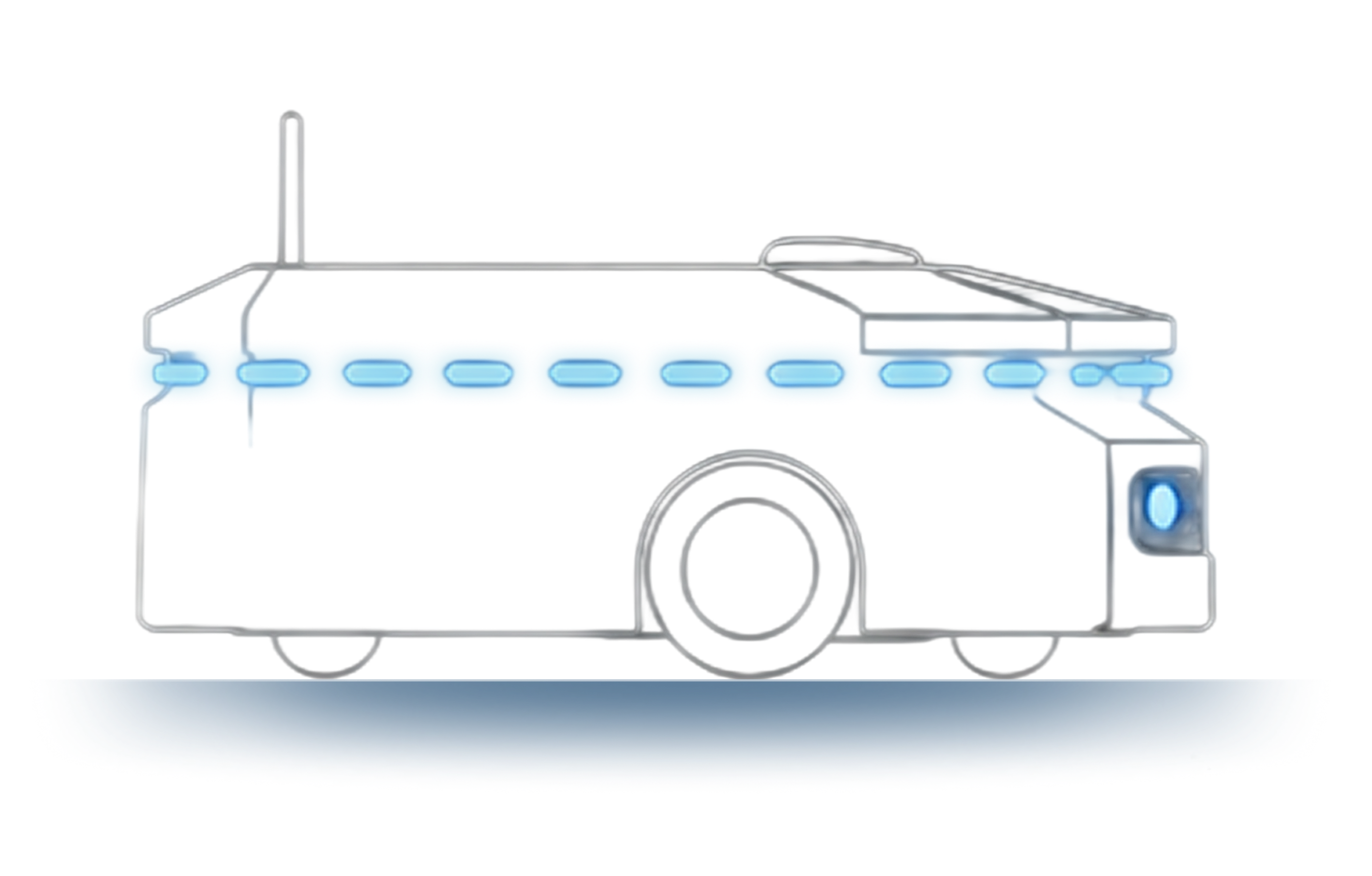
Robot state 04 — segmented blue light band: preparing to resume
Preparing to resume Verification in progress.
Stand clear; movement may resume.
State differentiation only · Final light and sound patterns require safety validation.
06

Validation & reflection

What holds, what's untested

A system can be coherent on paper and still fail if operators can't understand it. So the validation plan targets the assumptions, not the pixels.

H1 · Structured explanation

Can operators understand the incident faster than with status alone?

Measure → time to understanding · explanation accuracy
H2 · Automation transparency

Does showing recovery behavior help operators know when to intervene?

Measure → unnecessary interventions
H3 · Explicit recovery

Does verification prevent premature hand-back?

Measure → premature resume attempts
Honest limits

ORBIT is a conceptual system based on publicly available AMR workflows, without access to a production fleet or professional operators. Vendor-specific behavior remains implementation-dependent rather than assumed.

What I'd do next
01Test the three hypotheses through operator scenarios
02Validate physical signals against applicable robotics safety standards
03Extend the model to simultaneous incidents
Closing note

The challenge wasn't deciding what the operator should control. It was deciding when human judgment is needed — and how responsibility safely returns to autonomy.

© 2026 Monica HwangEmailLinkedInDesigned & built by Monica Hwang